

The case for launching a subscription-based model
The single biggest benefit of a subscription-based model is, of course, that it generates regular, predictable revenue, which explains why so many challengers have adopted it.
Challengers are heavily dependent on interchange fees. But high customer acquisition costs and the fact that — particularly in mature markets like the EU, UK, and US — consumers are still not comfortable making challengers their primary banks, means these fees aren't enough on their own to achieve profitability. Which is where subscription plans come in.
Needless to say, the situation is different for legacy banks and credit unions, whose main source of revenue is interest income, not interchange fees. But subscription tiers can still bring significant benefits.
An academic study on subscription-based models found they can dramatically increase user engagement, loyalty, and lifetime value, especially among previously inactive users.
The authors attribute this to more frequent touchpoints and the sense among consumers that, since they've committed to a monthly fee, they should get as much value out of it as possible.
The catch is that the customer must feel that the subscription is worth the price, or the strategy can backfire.
What makes banking subscription tiers worth the price of admission?
Around 16.5% of the banks and fintechs on FinTech Insights' database offer subscription tiers. Because structures and perks vary widely, we grouped the perks into 10 broad categories:
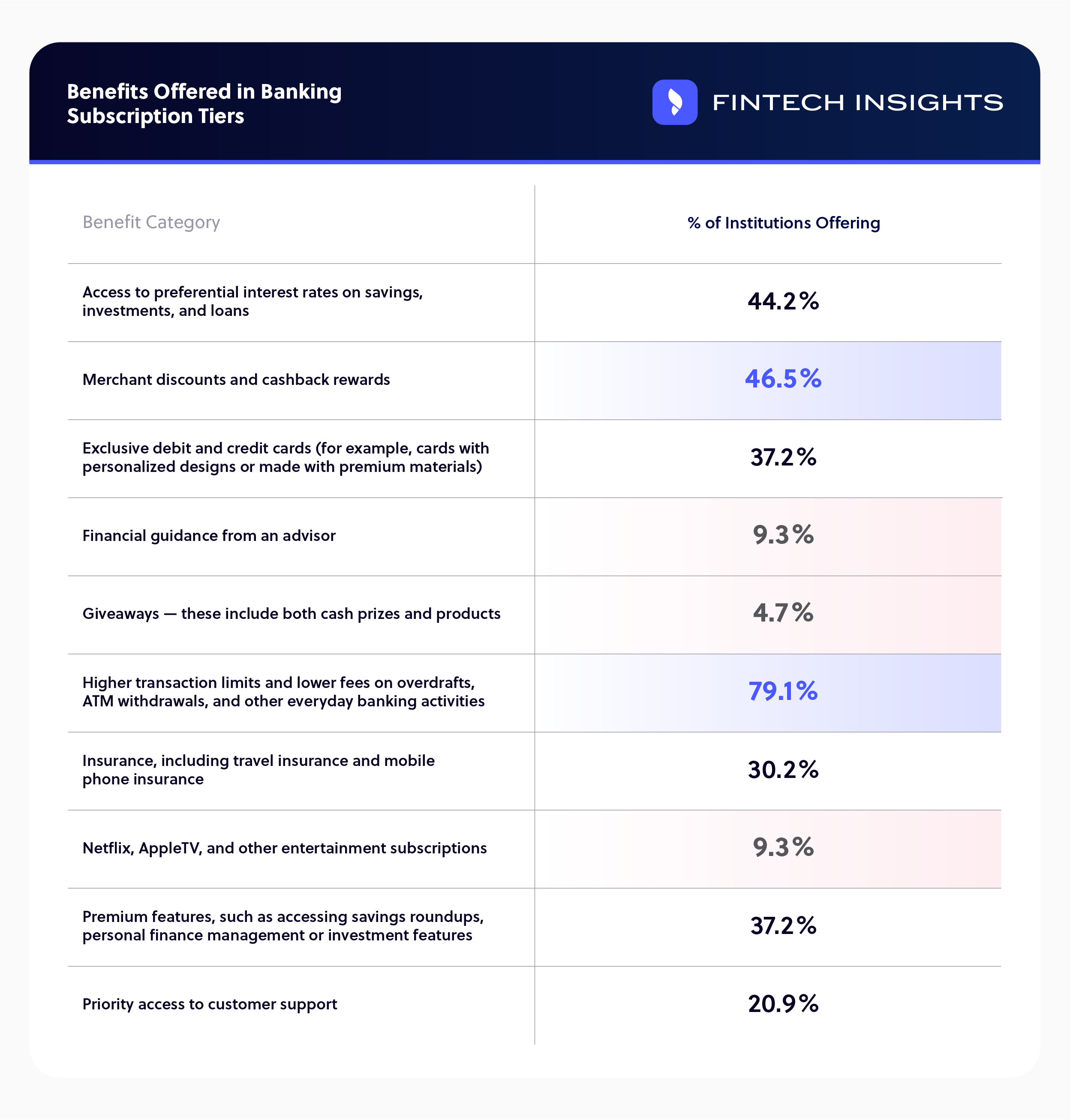
By far the most popular category is higher transaction limits and lower fees, offered by 79.1% of the firms with tiered plans. This is followed by discounts and cashback, offered by 46.5%.
At the other end of the spectrum, the least popular categories are financial advice from an advisor (9.3%), subscriptions (also 9.3%), and giveaways (4.7%).
Banking subscriptions done right: our standout picks
Our data strongly suggests tangible financial incentives are must-haves. But, beyond that, what makes subscription tiers stand out?
Here are the three firms on our database that, in our view, have especially compelling offers.
1. Revolut
With benefits from 8 out of our 10 categories, Revolut has the most comprehensive offer.
Higher limits and lower fees are front and centre. But the plans are also heavy on travel-related perks like airport lounge access, insurance, and discounts on international transfer fees.
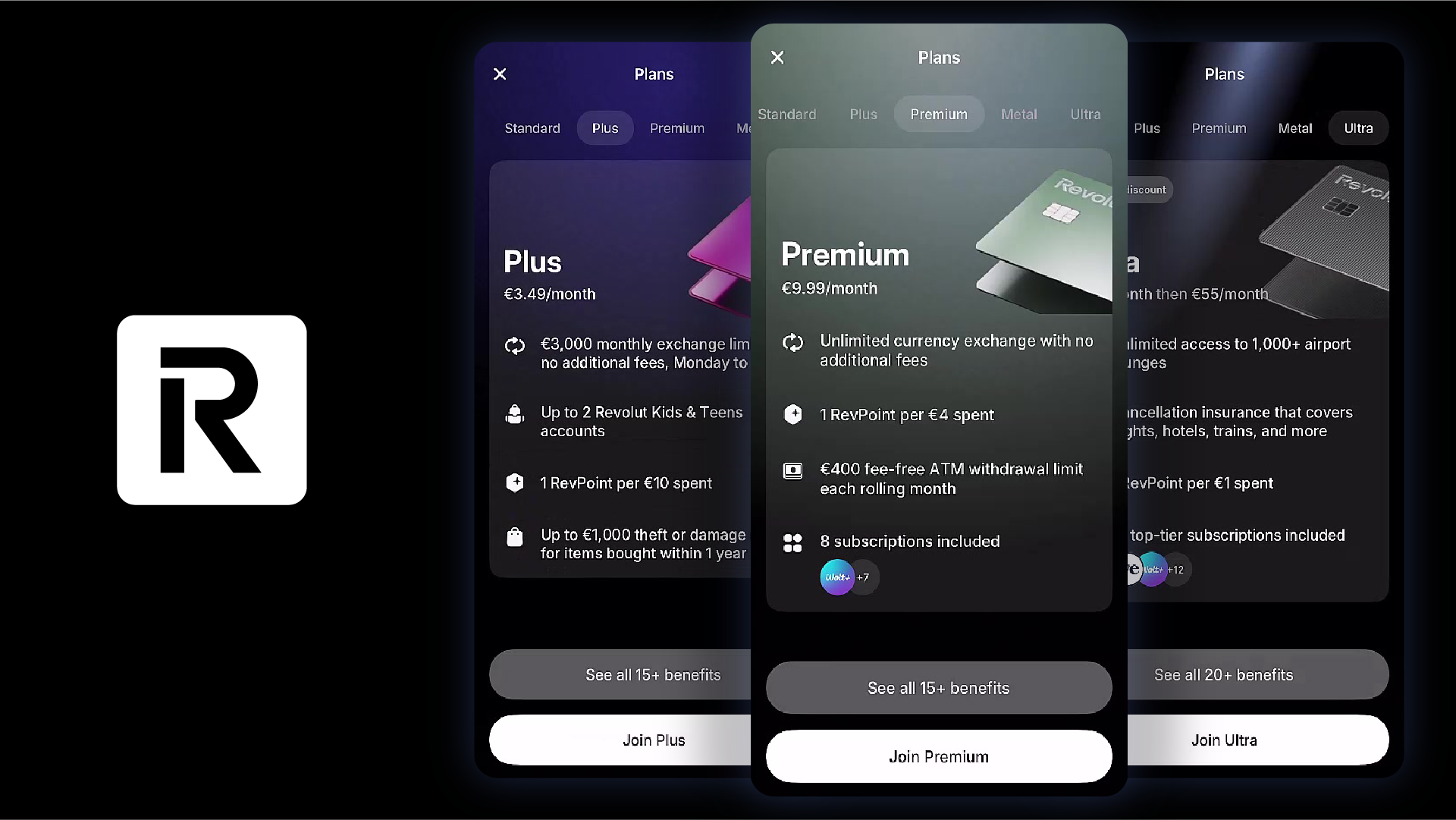
The higher the subscription tier, the more Rev points — Revolut's loyalty reward mechanism — a subscriber earns on every transaction. Subscribers also get access to priority chat-based support, and, depending on which tier they're on, access to more kids' accounts, and subscriptions to tools like NordVPN and Perplexity.
2. Monzo UK
While not as comprehensive as Revolut — benefits span 6 out of 10 categories — Monzo also bundles lifestyle add-ons into their subscriptions.
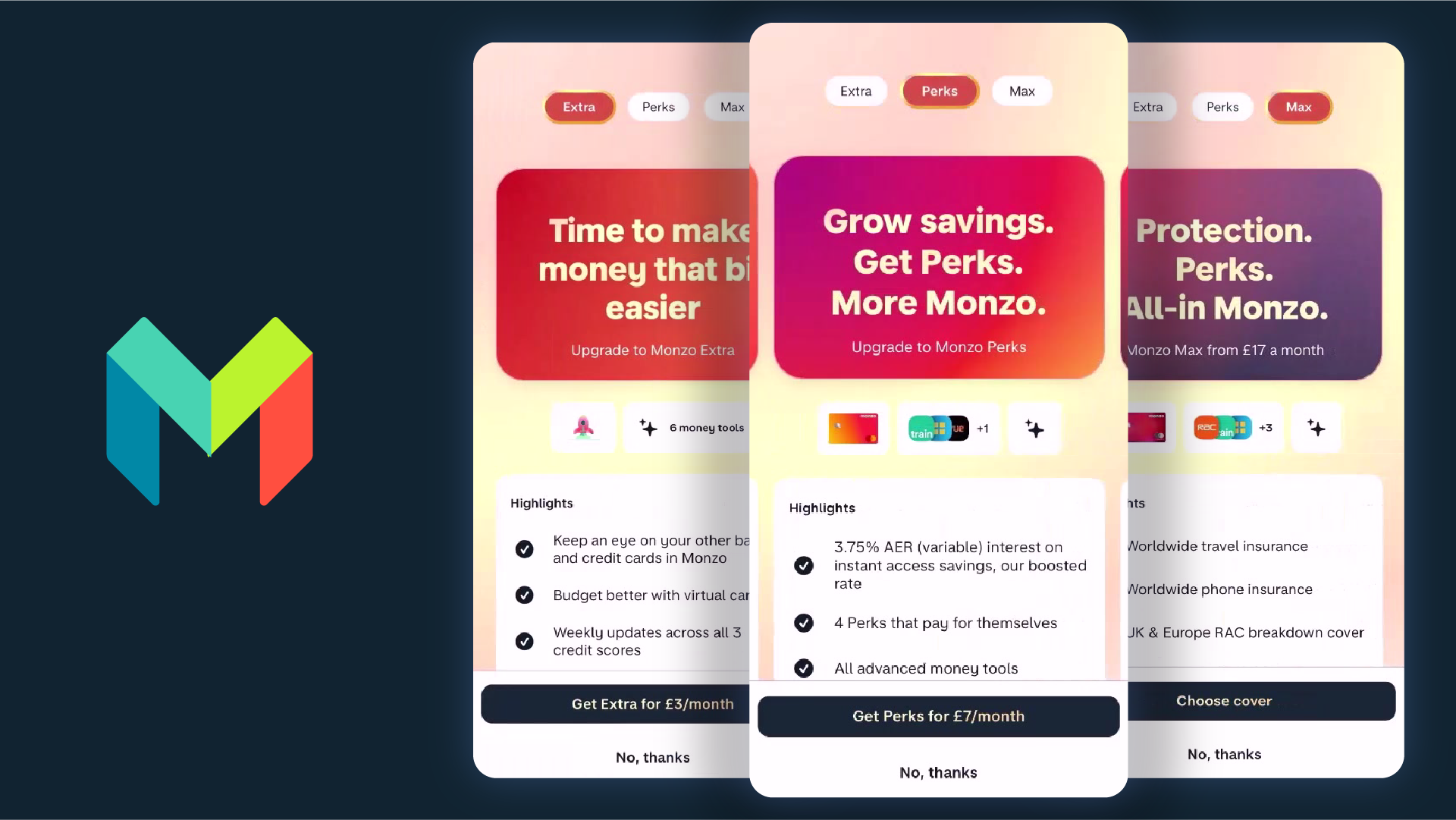
Many of these perks are travel-related: worldwide insurance cover, including the possibility to add a family member for an additional fee, railcards, vehicle breakdown assistance, mobile phone coverage, and an annual Uber subscription.
Subscribers also get access to virtual cards, advanced rounding up capabilities, more in-depth access to their credit reports, as well as a Billsback draw: where subscribers' bills are selected at random and paid by Monzo.
3. SoFi plus
SoFi's subscription plans are built almost entirely around financial optimization: higher interest rates on savings, up to 5% cashback, plus member-only rewards and bonuses. The latter includes a 2% bonus on retirement accounts around specific dates, like the end of the tax year, and a gift of stocks worth up to $2,000.
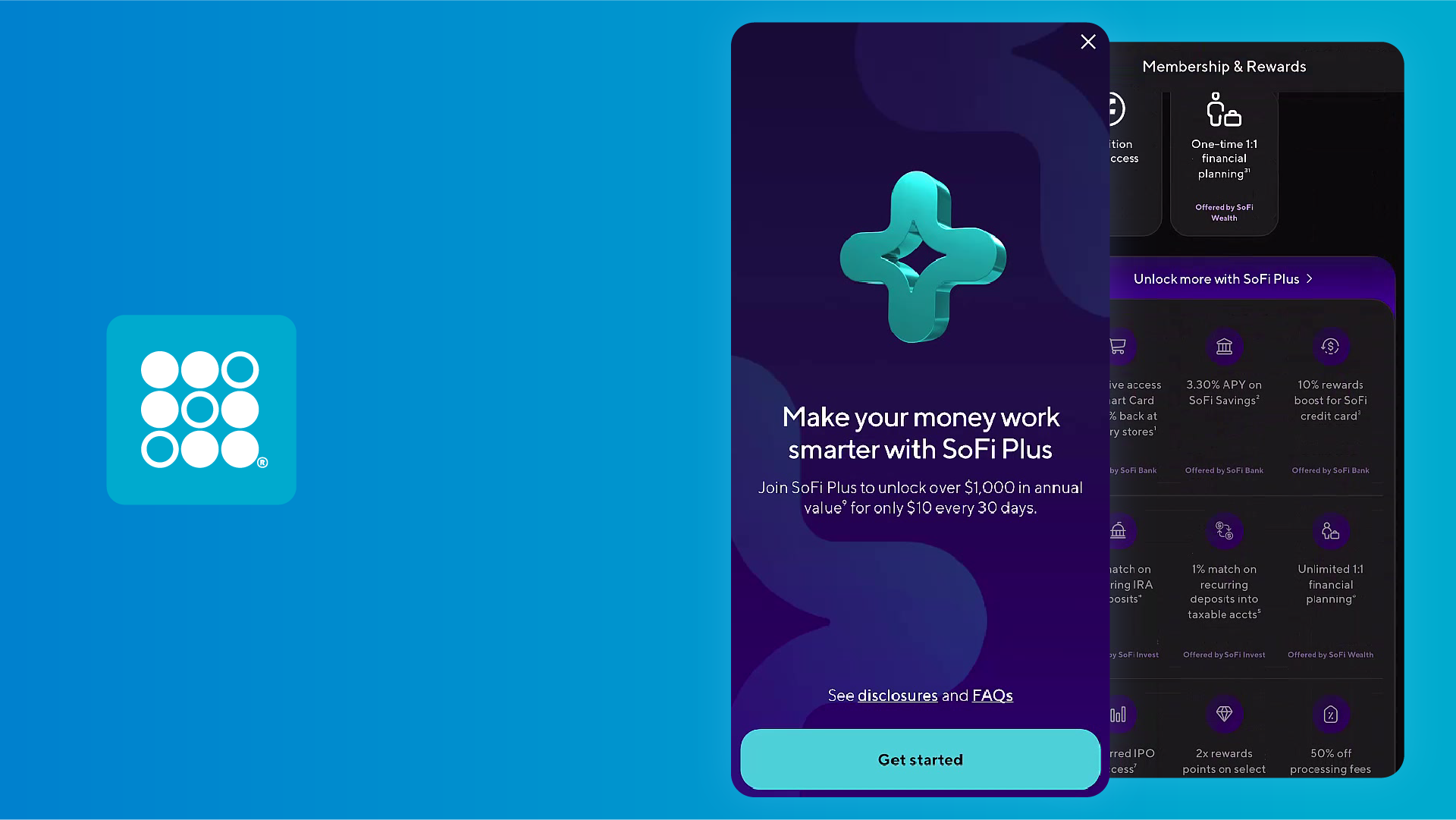
SoFi's stated mission is "getting your money right", so doubling down on these perks reinforces its brand values. The more-money-in-your-account approach also gives them a broader appeal.
Better rates and rewards win customers. Unique features win their loyalty
In a 2024 EY-Parthenon survey, 45% of respondents said they found banking fees unreasonable. And, the fees most likely to be considered unreasonable were those perceived as "commodities", such as ATM withdrawal fees and bill-payment charges.
The latter finding could help explain why subscriptions that offer higher limits and lower (or no) transaction fees are popular subscription perks. The subscription effectively converts surprise, variable charges into a single predictable cost — the monthly subscription fee. This arguably feels more reasonable and controllable.
Similarly, 78% of respondents to a Wildfire survey said they prefer cashback over other types of rewards like giveaways, and 85% want their bank to offer a cashback program. Put simply, when asked to choose between money in their account or some other type of gift, banking customers prefer the former.
But while features that make customers financially better off are must-haves, there are also opportunities to stand out. And unique features — whether value-added tools like financial advice or lifestyle add‑ons — will only grow in importance as more firms roll out subscription plans.
Considering rolling out subscription-based features or rethinking your current tiers?
FinTech Insights makes it quicker and easier to understand your market, prioritize, and spot gaps you could exploit.

Build a digital banking strategy that can't be challenged
Let's show you how FinTech Insights can help you wow your customers, on every login.